A long-awaited flood fix could spare hundreds of homes, but questions over railroad permits, future costs and citywide stormwater funding remain.
The post Tampa weighs $100M South Howard flood project as residents, businesses remain divided appeared first on Florida Politics – Campaigns & Elections. Lobbying & Government..
—
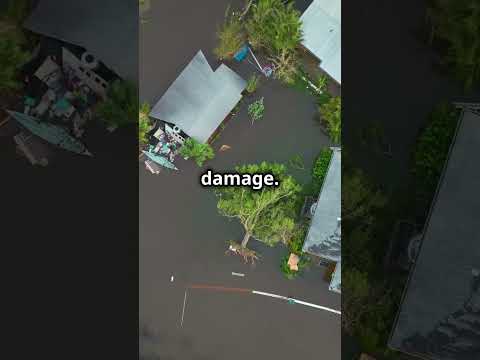
Kevin Rodgers, his wife and their two young children evacuated ahead of Hurricane Milton. When they returned, they found 2 feet of rainwater inside their first home.
Rebuilding took months and cost the family about $90,000 out of pocket, Rodgers told the Tampa City Council, draining their emergency savings. Now, he is urging Council members to approve the $100.4 million South Howard Flood Relief Project, a major drainage overhaul aimed at reducing chronic flooding in Parkland Estates, Palma Ceia Pines and surrounding neighborhoods.
“Another storm will come. We don’t know when,” Rodgers said. “I don’t want another family standing here explaining that they lost their homes while we continue debating a flooding problem that we already know how to address.”
The Council took no vote Thursday. Members discussed the project during the first of two required hearings for project contracts and funding, giving them their first extended opportunity to question city staff before a final vote Sept. 17.
That leaves two more weeks for a fight that has built for years. Flooded residents want Tampa to stop studying the problem and start building. Opponents argue the city could get similar results faster and for less money without tearing through the commercial corridor for nearly four years.
The project is meant to give stormwater trapped in low-lying South Tampa neighborhoods a larger path to Hillsborough Bay. Its centerpiece is a 10-by-10-foot drainage box designed to act like an underground river, moving water south toward the bay.
It would add about 7,000 feet of stormwater infrastructure while upgrading nearly 12,000 feet of water mains and relocating about 3,200 feet of sewer lines. The $100.4 million total includes $7.7 million already spent on design and a $92.7 million guaranteed maximum construction price.
City officials say the project would eliminate structural flooding for about 96 homes and businesses during the five-year, eight-hour storm it is designed to handle. Modeling of Hurricane Milton-like rainfall found roughly 230 homes and businesses that flooded during the hurricane could have been spared.
Construction would take three years and 10 months. The city plans to work in sections of roughly 400 to 600 feet to minimize impact on business access where possible and launch a “SoHo Open” campaign to keep customers coming.
The South Howard Flood Relief Project is meant to improve chronic flooding in Parkland Estates and surrounding neighborhoods. Image via the city of Tampa.
Supporters view the drainage spine as the foundation needed to relieve flooding now and expand the system later. Opponents see those later improvements as evidence Tampa could spend $100.4 million and still face significant additional costs.
The SoHo Business Alliance, working with its own engineers and consultants, argues Tampa should give more weight to maintenance, storage and alternatives that could reduce excavation along South Howard and disruption to businesses.
City officials pushed back, saying maintenance alone cannot solve a capacity problem. Staff said engineers evaluated 24 alternatives and concluded the South Howard route provides the strongest flood protection.
Steve Michelini, who represents the alliance, and other opponents have also questioned how much the project accomplishes for Palma Ceia Pines without more work.
Susan Fernandez, a small-business owner in Palma Ceia Pines who has spent hundreds of thousands of dollars repairing flood damage for over a decade, pushed back.
“First we need to have a place for this water to go,” Fernandez said. “The project that the city’s proposing gives a place for the water to go.” She said the benefits extend beyond homes to the hospital, a church, daycare and assisted-living facility.
City officials agreed. They later said Phase 1 would eliminate structural flooding there during the storm it is designed to handle, but acknowledged future improvements would still be needed to fully address roadway flooding. Staff estimated those potential improvements at roughly $27 million to $40 million, with no construction schedule yet.
Opposition also came from elsewhere in Tampa. Fran Tate, founder and President of the Jackson Heights Neighborhood Association, said the city is considering moving $1 million from a $1.5 million Broadway Avenue flood relief project in East Tampa to South Howard.
“They’re trying to take $1 million of our $1.5 million and repurpose it down there in South Howard. Why? We’re one of the most underserved areas in Tampa, Florida,” Tate said. “Broadway, it floods down there constantly, I know. I drive that area trying to get to Falkenburg. I’m here to appeal to you to say, ‘Please put the project back on the list. Don’t take our money.’”
In response to questions from Council Member Naya Young, staff later said the Broadway project currently has no path forward because of an easement issue but could be revived if that changes from other sources.
Harry Coleman, a Parkland Estates resident, said years of scrutiny have already changed the project. His neighborhood association once unanimously opposed it before later voting unanimously in support.
“Reasonable skepticism improved this project, but at some point deliberation has to produce a decision,” Coleman said.
The hourslong questioning exposed several issues Council members want addressed before Sept. 17, particularly how the drainage system will cross beneath CSX railroad tracks.
Resident Dana Jasper first surfaced the issue during public comment, pointing to city documents that identified an existing 5-by-10-foot box culvert beneath the railroad as an advantage of the Howard route and questioning whether the city had secured approval for the work ultimately planned there.
The $92.7 million construction price assumes the city will keep that culvert and bore an additional 60-inch pipe beside it. Staff said the city would actually prefer to replace the crossing with a full 10-by-10-foot culvert to save roughly $3 million, but that would require CSX to allow the tracks to close for four to six weeks.
Jasper’s questions soon became a sticking point for Council Chair Alan Clendenin because neither option has received final approval from CSX. Clendenin said he wants greater certainty before committing $100 million to a system whose ability to move water depends on getting beneath the tracks, and its effectiveness could be cut in half if needed approvals are denied.
Clendenin said he strongly wants to “get to yes” on the project, but expressed concern over the uncertainty.
“Before we vote on a contract of $100 million, we need to make sure that we know what we’re voting on,” Clendenin said. “I think injecting this variable is really problematic, not knowing for sure what would be crossing underneath those tracks.”
Staff and the contractor said CSX permits routinely come later in the design process and can take six months to a year. The contractor said the current design meets CSX criteria and it has never failed to secure a permit when those standards were met.
Though technical, Clendenin’s heartburn could be something to watch on Sept. 17 when the fate of the project may come down to the swing of his vote.
Money elsewhere in Tampa also remained a concern. Council Member Bill Carlson pressed finance staff on what South Howard would leave available for neighborhoods that flooded but are not already included in the city’s five-year capital plan. Carlson also argued that Tampa should have conducted a more thorough comparison of alternatives before settling on the South Howard route.
Staff acknowledged there would be very little unallocated stormwater money available during that period after existing projects and South Howard are accounted for, though officials said considerably more capacity remains over the life of the assessment.
Mayor Jane Castor, who does not vote on Council contracts, has strongly supported moving ahead and argued that more study would only leave flood-prone neighborhoods exposed longer.
The post Tampa weighs $100M South Howard flood project as residents, businesses remain divided appeared first on Florida Politics – Campaigns & Elections. Lobbying & Government..